General

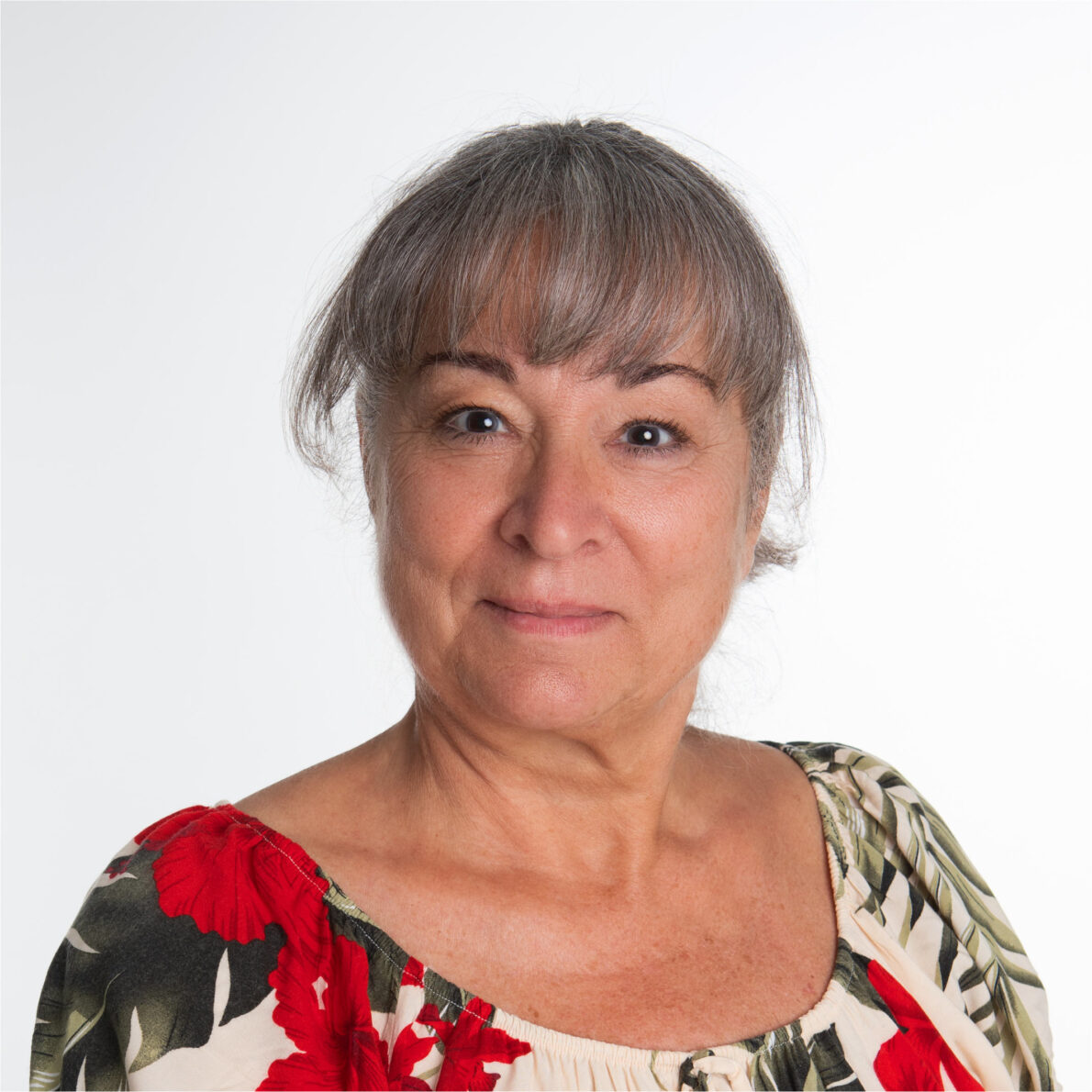
One could think my life began with books. In fact, I worked for several years as an editor, chiseling words, seeking the precision of a phrase, the breathing of a text. I have always loved language; books taught me patience and exactness. But the true school, the hardest and the most beautiful, was family.
Raising children, going through joys, crises, sleepless nights, laughter, separations… nothing initiates more deeply than that path. It taught me humility, flexibility, inner strength. Being a mother shaped me as much as my profession, if not more.
In parallel, there was art. Always present in my life, but set aside at first because it was “not a real job.” One day, watching a friend draw mandalas, I thought I could do the same. I sat down, took my pencils… and I understood. A mandala is not a simple drawing, it is a world. I entered it, but at a certain point something essential was missing. I believed it was a tool, so I bought countless colors, brushes, pens, calligraphy nibs — and suddenly, it was a precious object that opened the door: my Mont-Blanc pen, offered by an author grateful for my editorial work. I began to draw with it and it immediately reminded me that words were my first breath. Calligraphy. An intense memory in my DNA. I began to inscribe mantras within my mandalas, and everything aligned. The Mantradalas were born: vibrational codes where color, form, and the word unite.
The Mantradalas also carry a vibrational encoding, a subtle dimension that works beyond the visible form. [I share more about this here.]
Today, I continue to explore this language. The Mantradalas are not only visual works; they are companions, mirrors, passages. They carry the memory of a path, and each person can find their own resonance within them. A Mantradala can also re-encode the place where it is hung.
My journey, seemingly fragmented — artist, mother, editor — is in reality a single trajectory: learning to listen, to translate, to give form to what is seeking to be expressed.
On pourrait croire que ma vie a commencé dans les livres. De fait, j’ai travaillé quelques années comme éditrice, ciselant des mots, cherchant la justesse d’une phrase, la respiration d’un texte. J’ai toujours aimé la langue, les livres m’ont appris la patience et l’exigence. Mais la vraie école, la plus rude et la plus belle, a été celle de la famille.
Élever des enfants, traverser les joies, les crises, les nuits blanches, les éclats de rire, les séparations… rien n’initie plus profondément que ce chemin-là. J’y ai appris l’humilité, la souplesse, la force intérieure. Être mère m’a façonnée autant que mon métier, sinon davantage.
En parallèle, il y a eu l’art. Toujours présent dans ma vie, mais d’abord mis de côté parce que «pas un vrai métier». Un jour, en voyant une amie tracer des mandalas, j’ai cru que je pourrais en faire autant. Je me suis installée, j’ai pris mes crayons… et j’ai compris. Un mandala n’est pas un simple dessin, c’est un monde. Je l’ai pénétré, mais à un certain moment, il m’a manqué quelque chose d’essentiel. J’ai cru que c’était un outil, j’ai alors acheté moult couleurs, pinceaux, stylos, calames et soudain, c’est un objet précieux qui m’a ouvert la porte: ma plume Mont-Blanc, offerte par un auteur reconnaissant de mon travail d’éditrice. J’ai commencé à dessiner avec elle et tout d’un coup, elle m’a rappelé que les mots étaient ma respiration première. La calligraphie. Une mémoire intense dans mon ADN. J’ai commencé à inscrire des mantras dans mes mandalas, et alors tout s’est aligné. Les Mantradalas étaient nés: des codes vibratoires où s’unissent la couleur, la forme et le verbe.
Aujourd’hui, je continue d’explorer ce langage. Les Mantradalas ne sont pas seulement des œuvres visuelles, ils sont des compagnons, des miroirs, des passages. Ils portent la mémoire d’un chemin et chacun peut y trouver une résonance intime. Un Mantradala peut également ré-encoder l’endroit où il est accroché.
Mon parcours, en apparence fragmenté — artiste, mère, éditrice — est en réalité une seule et même trajectoire: apprendre à écouter, à traduire, à donner forme à ce qui cherche à se dire.
Share this blog post on